

You could hit a few snags while leading a large organization through digital transformation or fine-tuning an existing cloud environment. Both come with their fair share of complexity.
For example, while cloud computing opens doors to innovation, you may need to tackle hybrid environment management and multi-cloud costs head-on. But the good news is that your existing technical debt from legacy systems can help guide your modernization priorities, enabling smarter choices about what to migrate and when. By embracing containerization, automation, and modern operating models, you’re not just solving problems—you’re positioning your organization to thrive.
Not sure where to start? This guide covers the essentials of enterprise cloud computing so you can build a practical strategy and avoid costly pitfalls.
Quick definition: enterprise cloud computing solutions
Enterprise cloud computing solutions are scalable, secure cloud infrastructure and services designed to support complex enterprise workloads, compliance requirements, and global operations.
What is enterprise cloud computing?
Enterprise cloud computing transforms IT resource delivery rather than simply moving business operations to the cloud. It gives your organization on-demand access to computing power, data storage, automation, and applications through internet-based services—while providing the scale, resilience, and governance enterprise operations require.
Unlike smaller-scale cloud setups, enterprise cloud solutions support complex workflows ranging from mission-critical applications to data analytics platforms. They typically require stronger security controls, auditability, policy enforcement, and performance consistency across regions and business units.
Gartner forecasts worldwide public cloud end-user spending to surpass $675 billion in 2024. That surge reflects a fundamental shift in how enterprises operate—making strategy and operational discipline essential. In practice, that means investing in cloud governance for control and compliance, FinOps for cost optimization, and workload optimization for performance and reliability.
Enterprise cloud architecture components
Enterprise cloud success depends on more than “choosing a provider.” Most mature organizations build an operating system around the cloud. Common components include:
- Landing zone and account/subscription structure: standardized org hierarchy, network baselines, and guardrails.
- Identity and access management (IAM): least-privilege access, role design, and identity lifecycle automation.
- Networking and connectivity: secure VPC/VNet design, segmentation, private connectivity, DNS, and traffic controls.
- Security and compliance controls: policy-as-code, audit trails, encryption standards, and continuous monitoring.
- Observability: logging, metrics, tracing, SLOs, and incident workflows.
- FinOps and cost governance: tagging, allocations, budgets, anomaly detection, and unit cost KPIs.
- Platform engineering and automation: IaC, CI/CD, golden paths, and self-service developer platforms.
- Reliability and resilience: backup, DR, multi-region design, and chaos testing where appropriate.
The 4 types of enterprise cloud computing models
(Source)
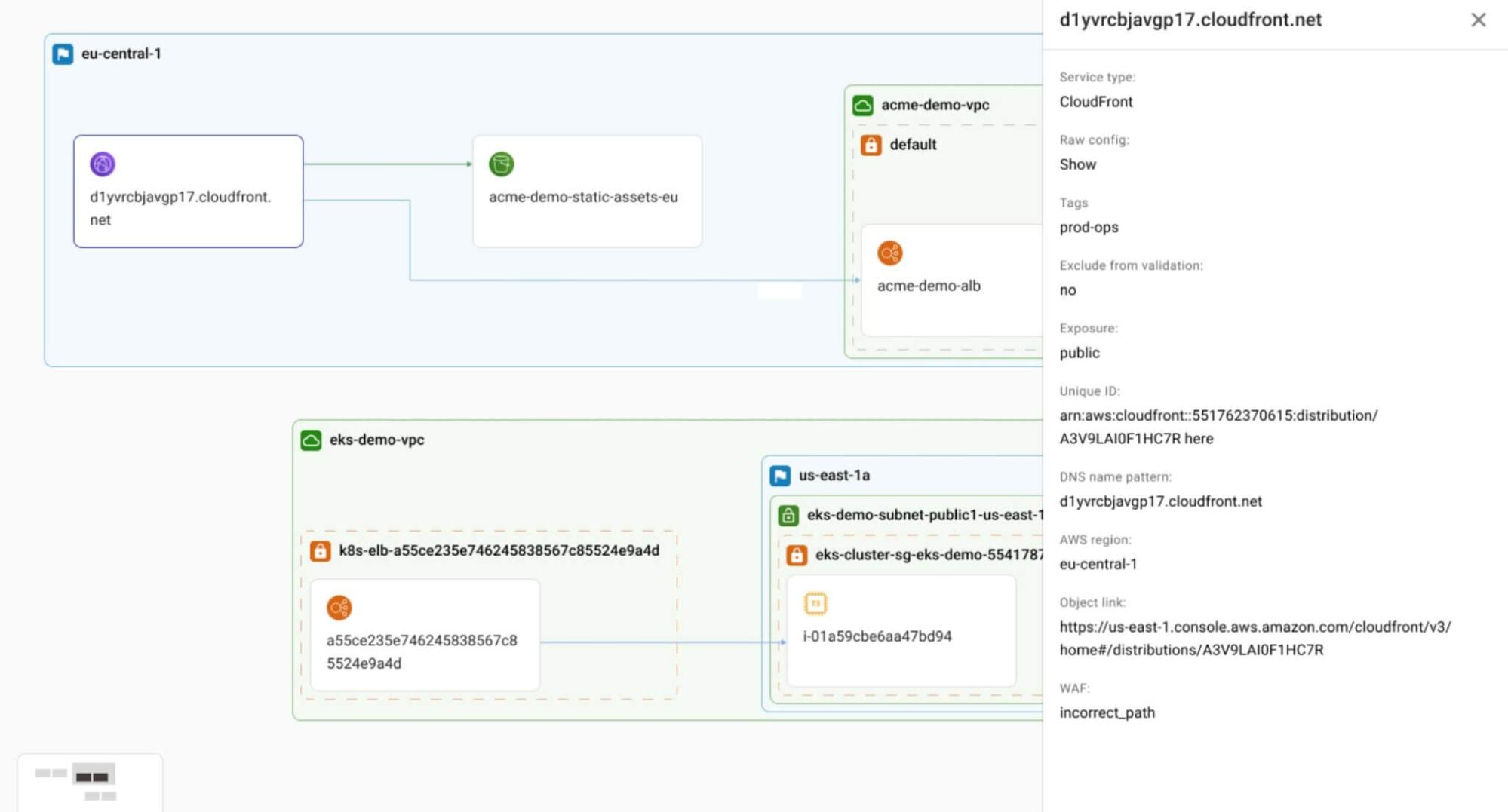
Understanding the different cloud models helps you make informed decisions about infrastructure. Each model offers distinct advantages and can be used independently or combined to meet specific business needs.
Public cloud
The public cloud offers services over the internet, with providers like AWS (Amazon Web Services), Google Cloud Platform, and Microsoft Azure managing the infrastructure. Benefits include:
- Rapid scalability without up-front infrastructure investment
- Pay-as-you-go pricing models
- Built-in redundancy and global reach
- Regular updates and new feature rollouts
Some enterprises face challenges with public cloud adoption, especially around data sovereignty and compliance requirements. For example, the General Data Protection Regulation (GDPR) in Europe can limit data transfer outside the European Economic Area.
Private cloud
Private cloud infrastructure is dedicated solely to your organization, either on-premises or hosted by a third party. Key advantages include:
- Complete control over infrastructure and security
- Customization to meet specific compliance requirements
- Predictable performance for critical applications
- Direct oversight of data location and management
Private clouds can be harder to scale due to limited physical infrastructure and require in-house expertise to manage maintenance, security updates, and hardware upgrades.
They also come with higher costs: up-front investments plus ongoing maintenance responsibilities and skilled staffing needs across virtualization, networking, and storage.
Hybrid cloud
Hybrid cloud environments combine public and private clouds, allowing your organization to leverage the benefits of both. This model enables:
- Workload optimization across environments
- Cost-effective resource allocation
- Enhanced disaster recovery capabilities
- Flexibility to meet varying security requirements
In retail, hybrid can keep sensitive customer data in private environments while using public cloud resources to handle seasonal demand spikes. In manufacturing, hybrid clouds are often used to process real-time IoT sensor data locally for fast responses, while public clouds handle advanced analytics and long-term storage.
Multicloud
Many businesses also turn to multicloud strategies, using services from multiple providers to:
- Avoid vendor lock-in
- Optimize costs across providers
- Leverage best-of-breed services
- Enhance disaster recovery capabilities
Choosing the right cloud model depends on workload needs (performance, data processing, dependencies), compliance and security requirements, and total cost across up-front and long-term expenses.
What are the benefits of enterprise cloud computing?
(Source)
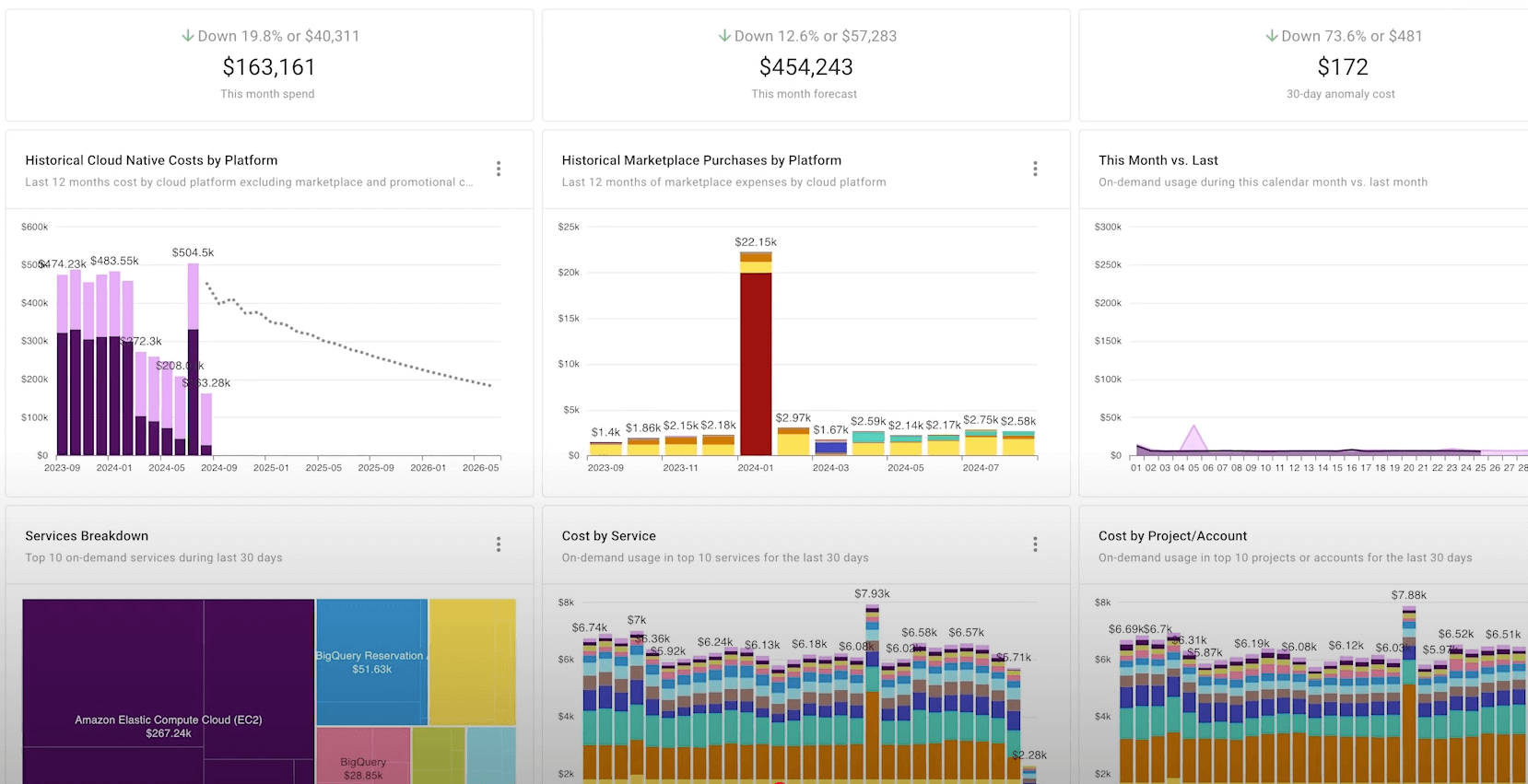
Infrastructure savings matter, but enterprise cloud benefits extend beyond cost reduction. Enterprises use cloud capabilities to improve operational efficiency, responsiveness, and competitive advantage across multiple dimensions.
Scalability
Enterprise cloud computing lets organizations adapt to market demands in real time by scaling resources based on actual usage rather than predicted peaks. You can increase capacity during busy seasons and scale down during slower periods without maintaining excess infrastructure.
Flexibility
Cloud enables secure access for distributed teams and faster application delivery. It also supports experimentation with new tools and services without large up-front investments, helping organizations innovate while managing risk.
Cost efficiency
Enterprise cloud can be cost-effective when managed with discipline. Pay-for-use reduces the need for excess capacity, and automation helps reduce waste. Because cloud providers handle infrastructure upkeep and updates, enterprises can reduce maintenance overhead.
Successful organizations commonly adopt FinOps practices to align finance, engineering, and operations around visibility, accountability, and continuous optimization. With the right operating model and tooling, enterprises can often cut cloud spending by 20% to 30% while maintaining performance.
Collaboration
Cloud-based collaboration tools help enterprise teams work across locations and time zones. Examples include:
- Project management tools like Jira and Asana
- Real-time document collaboration like Google Workspace and Microsoft 365
- Communication tools like Slack and Microsoft Teams
- Shared code repositories like GitHub and GitLab
This improves coordination across global programs and reduces friction across complex workflows.
Disaster recovery
Cloud adoption can significantly improve disaster recovery and business continuity. Enterprises can leverage automated backups, distributed infrastructure, and failover capabilities rather than maintaining redundant data centers.
The top challenges in implementing cloud solutions
Enterprise cloud benefits are real, but implementation introduces challenges that require strong planning, governance, and operational maturity.
Security
Security remains a top concern for enterprises, especially when sensitive data and regulated workloads span multiple environments. Focus on:
- Data protection and compliance: encryption, access controls, and audits across cloud environments.
- Identity and access management: least privilege, MFA, conditional access, and Zero Trust principles.
- Threat detection and response: tools and workflows that work across hybrid and multicloud footprints.
Integration
Connecting cloud services to existing systems can surface hidden complexity, particularly with legacy apps and data dependencies. Enterprises need robust API management, secure connectivity patterns, and orchestration across environments to maintain performance and continuity.
Spend management
Cloud spend management is a continuous discipline. Pricing complexity, frequent service changes, and shifting usage patterns make forecasting difficult. Enterprises often need specialized processes and tooling for allocations, anomaly detection, budgeting, and unit cost metrics to maintain control.
5 best practices for enterprise cloud adoption
(Source)
Enterprise cloud success requires an operating model that aligns technology with business outcomes, improves reliability, and controls cost and risk.
1. Align with business needs
Start by aligning cloud initiatives with business goals. Talk to stakeholders across teams to understand needs and constraints. Prioritize workloads based on business impact, technical complexity, dependencies, and measurable outcomes like time-to-market or customer experience improvements.
2. Choose the right model
Select the right cloud model by mapping application and data requirements across performance, security, compliance, and integration. Customer-facing apps with variable traffic may fit public cloud, while sensitive systems may require private or hybrid patterns. Plan for future growth and total cost over time.
3. Develop a migration strategy
Create a clear migration roadmap by breaking the process into phases. Start with lower-risk workloads, validate your approach with testing, and maintain rollback plans. Prioritize migrations based on business value, complexity, and readiness.
4. Implement security and compliance
Build security into your cloud foundation from day one. Use automation and infrastructure as code to standardize controls, reduce human error, and enforce policy consistently. Add continuous monitoring, posture management, and periodic reviews to sustain compliance.
5. Optimize costs
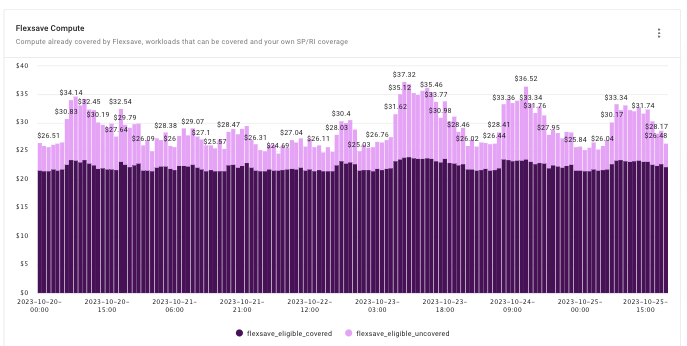
Use cost management strategies like tagging standards, allocations, anomaly detection, budgets, and rightsizing. Consider reserved capacity or savings plans for predictable workloads and autoscaling for variability. Establish a FinOps culture by aligning finance, engineering, and operations around shared metrics like cost per customer, cost per transaction, and budget variance.
How to evaluate enterprise cloud providers
If you’re selecting a primary provider—or validating an existing choice—use criteria that reflect enterprise realities beyond feature checklists.
- Governance and guardrails: policy enforcement, org structure support, and auditability at scale.
- Security and compliance readiness: certifications, encryption capabilities, IAM maturity, and monitoring integrations.
- Global footprint and performance: regions, availability zones, network performance, and resiliency options.
- Cost visibility and control: allocations, budgets, anomaly detection, commitment tooling, and unit cost reporting.
- Workload fit: best-of-breed services for your priority workloads (data, AI/ML, Kubernetes, analytics, etc.).
- Operating model support: tooling and APIs that work with IaC, CI/CD, platform engineering, and SRE practices.
FAQ: enterprise cloud computing solutions
What are enterprise cloud computing solutions?
Enterprise cloud computing solutions are scalable, secure cloud infrastructure and services designed to support complex workloads, compliance requirements, and global operations.
What is the difference between enterprise cloud and regular cloud computing?
Enterprise cloud typically adds governance, security, auditability, reliability targets, and cost allocation capabilities needed to support many teams and mission-critical workloads at scale.
Is hybrid cloud or multicloud better for enterprises?
Hybrid cloud is useful when workloads must stay on-premises for latency, data residency, or compliance. Multicloud can reduce lock-in and enable best-of-breed services. Many enterprises use both patterns depending on workload needs.
How do enterprises control cloud costs?
Enterprises commonly use FinOps practices, tagging and allocation standards, budgets and alerts, anomaly detection, rightsizing, autoscaling, and commitment strategies for predictable workloads.
Maximize your enterprise cloud investment with DoiT
(Source)
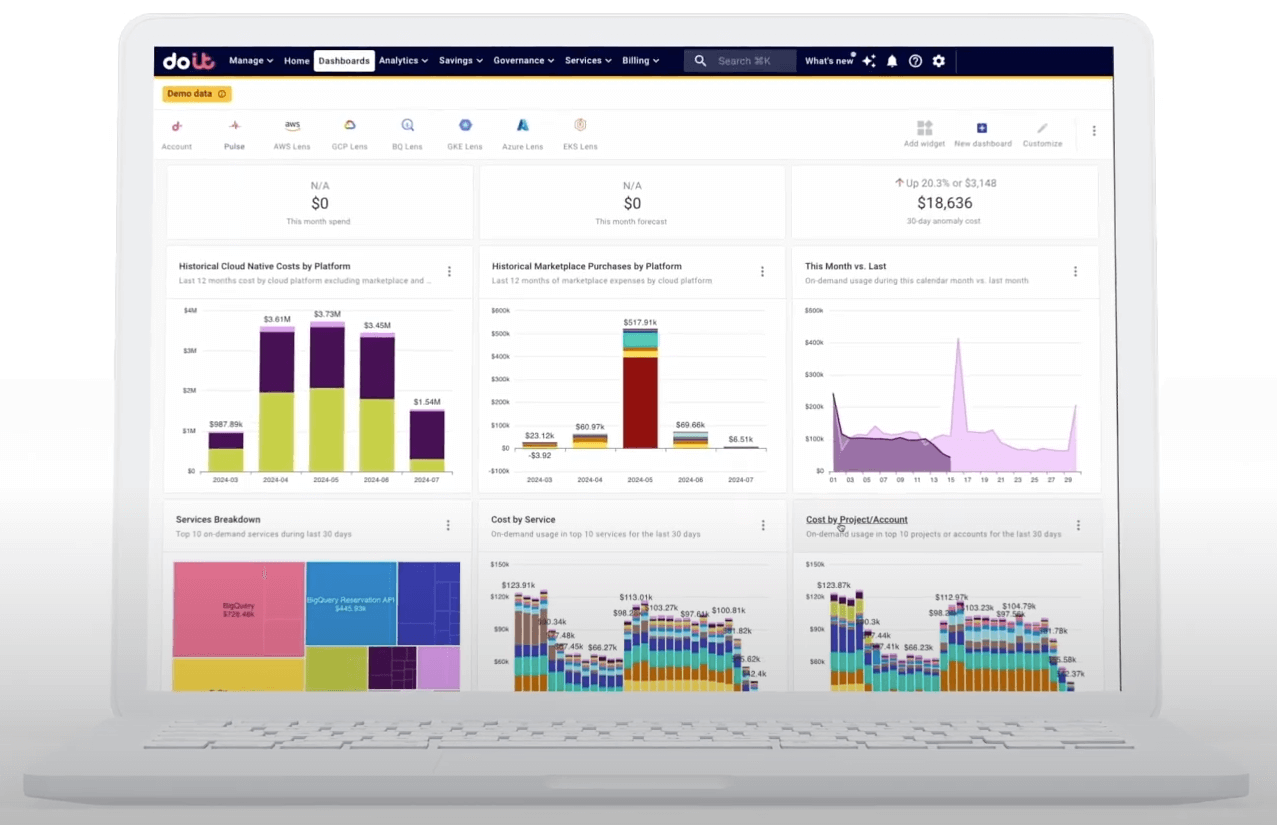
Optimizing enterprise cloud infrastructure requires the right combination of visibility, governance, and operational discipline. DoiT’s cloud management solutions help teams navigate complexity while improving cost control, performance, and compliance.
DoiT’s platform provides unified visibility across cloud providers so teams can monitor and optimize cloud environments from a single interface. It supports enterprise needs with tooling for cost management, performance optimization, and cloud governance to reduce waste, improve reliability, and enforce compliance.
If you want to explore capabilities without relying on end-of-article CTAs, start with the platform overview or services pages and evaluate fit against your enterprise requirements.