
As cloud adoption accelerates, solid financial operations (FinOps) practices have never been more important. FinOps is an operational framework that brings together finance, engineering, and product teams to manage cloud spend collaboratively. The aim is not just cost reduction, but cost optimization: enabling innovation while maintaining financial accountability.
Without clear ownership, real-time visibility, and continuous cost controls, cloud spend can quickly get out of hand, throwing off budgets and derailing business goals. In this article, we examine nine proven FinOps best practices to help you align cloud investments with business value.
Quick answers: FinOps best practices
**What are FinOps best practices?**FinOps best practices are structured processes that help organizations manage, optimize, and forecast cloud spending through collaboration, automation, and real-time data visibility.**What are the core principles of FinOps?**FinOps is built on collaboration, shared ownership, centralized enablement, real-time cost data, and continuous optimization.**How can FinOps reduce cloud costs?**FinOps reduces cloud costs by improving resource utilization, optimizing commitment strategies, automating idle environments, enforcing tagging standards, and continuously rightsizing workloads.
9 FinOps Best Practices Worth Implementing
Here are nine essential FinOps best practices to help you optimize cloud costs and drive greater value from spend:
1. Establish clear policies for cost governance and accountability
Effective FinOps requires structured governance. Define cloud cost ownership at the team, service, or application level and ensure accountable owners have visibility into their spend.
Governance frameworks should include:
- Cost allocation policies based on business units or products
- Approval workflows tied to budget thresholds
- Policy-based automation to enforce limits and flag anomalies
- Periodic reviews of forecasted versus actual spend
Clear accountability eliminates the “not my budget” mindset that leads to waste.
2. Build cross-functional FinOps teams with shared goals and KPIs
FinOps bridges finance, engineering, and operations. Cross-functional teams ensure cost decisions balance efficiency with reliability and innovation.
Shared KPIs may include:
- Cost per transaction or customer
- Infrastructure utilization rates
- Commitment coverage percentage
- Waste spend rate
- Service-level adherence during optimization
Aligned KPIs reduce friction between cost control and performance objectives.
3. Leverage tagging strategies for accurate cost allocation
Tagging enables transparent cost allocation across departments, projects, and environments.
- Standardized taxonomy (owner, project, environment, cost center)
- Automation through policy-as-code
- Ongoing compliance monitoring
- Cross-cloud consistency
Strong tagging drives better decision-making through detailed cost reporting.
4. Optimize cloud commitments (Reserved Instances, Savings Plans)
Commitment-based pricing models can reduce costs by up to 70% when aligned with usage patterns.
- Analyze usage baselines
- Balance 1-year and 3-year commitments
- Monitor utilization rates
- Use commitment management tools
- Assign clear ownership
Mature FinOps teams typically target 70%–90% commitment coverage for stable workloads.
5. Automate and schedule non-production environments
Development and staging environments often run 24/7 unnecessarily.
- Automate off-hours shutdown schedules
- Detect inactivity patterns
- Provide developer override workflows
- Integrate with CI/CD pipelines
Organizations can reduce non-production costs by up to 75% through scheduling.
6. Continuously monitor idle resources and rightsizing opportunities
Cloud environments frequently accumulate underutilized assets.
- Analyze sustained low utilization
- Provide actionable rightsizing recommendations
- Detect orphaned resources
- Prevent over-allocation at provisioning
Continuous rightsizing can reduce costs by 20%–30% depending on workload volatility.
7. Conduct regular well-architected reviews
Architecture directly impacts cost efficiency.
- Evaluate service selection
- Align storage tiers with usage patterns
- Explore serverless or container replacements
- Perform deep workload analysis
Well-architected reviews often uncover optimization opportunities automation cannot detect.
8. Use real-time, accessible cost data
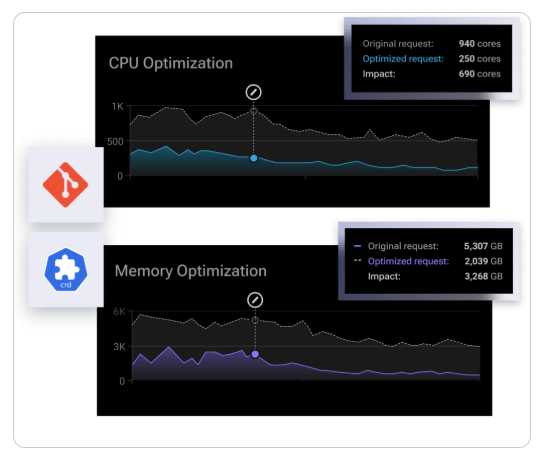
Monthly billing reports are insufficient for modern cloud management.
- Provide daily cost updates
- Offer accessible dashboards
- Enable drill-down analysis
Real-time visibility enables proactive decision-making.
9. Establish a cost-conscious FinOps culture
Building a cost optimization culture ensures sustainability.
- Include cost objectives in performance reviews
- Celebrate optimization wins
- Provide cloud economics training
- Make cost data transparent
A strong FinOps culture embeds cost awareness into daily decision-making.
The Core Principles of FinOps
FinOps rests on six key principles:
- Collaboration across teams
- Business value drives decisions
- Shared ownership of usage
- Timely and accurate data
- Centralized enablement
- Leveraging the cloud’s variable cost model
Cloud bill shouldn't be a mystery
One platform for AI and Cloud optimization.
Common FinOps Challenges
- Lack of cost visibility: Implement tagging and ownership frameworks.
- Engineering resistance: Focus on education and enablement.
- Forecasting difficulty: Use predictive analytics and collaborative reviews.
- Multicloud complexity: Standardize reporting and processes.
FinOps FAQ
What is FinOps in simple terms?
FinOps is a collaborative practice that helps organizations manage cloud spending efficiently while enabling innovation and business growth.
How do you implement FinOps?
Implement FinOps by defining ownership, enforcing tagging, optimizing commitments, automating non-production schedules, and establishing cross-functional collaboration.
What metrics should FinOps teams track?
Track cost per unit, utilization rates, commitment coverage, waste spend, anomaly detection time, and budget variance.
Optimize Your FinOps Strategy
Cloud costs don’t have to be stressful or unpredictable. With the right combination of governance, automation, culture, and tooling, you can turn cloud spending into a strategic advantage.
Grab our guide to Kubernetes costs and complexity to learn how to budget strategically for scalable operations.


