











Latest
More Posts
665 published posts

The 5 best MongoDB alternatives for engineering teams in 2026
MongoDB's licensing, Atlas pricing, and lock-in are pushing teams to look elsewhere. Here are the 5 strongest alternatives in 2026 and how to choose the right fit.

The Gemini Ecosystem: A Guide to Google’s AI Naming
Google's 'Gemini' brand now spans models, APIs, and enterprise platforms. Here's how to navigate the ecosystem and choose the right service for your AI workloads.

Datadog pricing explained: How to Forecast, Control, and Optimize Observability Costs
Datadog bills across five-plus independent dimensions, and most teams see bills 2-3x their initial estimate. Here's how to forecast, control, and optimize observability spend.
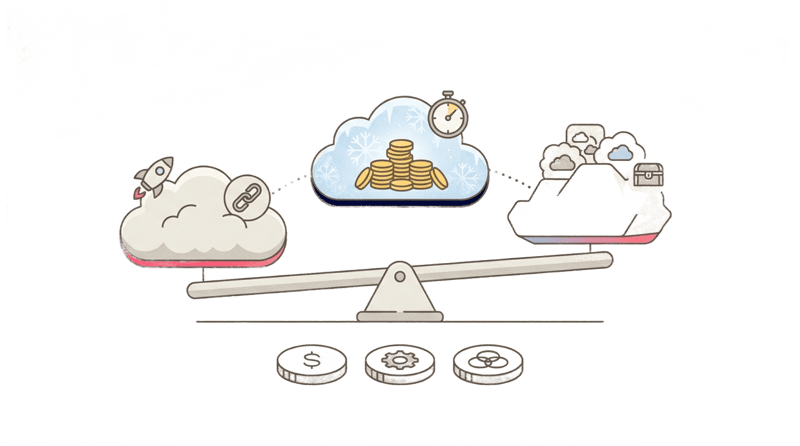
Snowflake competitors compared: cost, performance, and multi-cloud tradeoffs
A side-by-side look at Snowflake's top competitors across hyperscaler warehouses, lakehouse platforms, and legacy vendors, with a framework to evaluate cost, performance, and multi-cloud tradeoffs.

Guide to Anthropic API Pricing for Budget Forecasting
Anthropic charges per token, with output costing 5x input across every Claude model. Learn how to forecast AI spend and unlock up to 90% savings with caching and batching.

Cloud Health Monitoring Explained: Metrics, Tools, and How to Take Action
Cloud health monitoring connects cost efficiency, performance reliability, and resource utilization into one operational view—then turns signals into automated action.

AWS EC2 Pricing: A FinOps Guide to Models, Hidden Costs, and Optimization
AWS EC2 rates are only half the story. Learn how data transfer, EBS, and IPv4 charges inflate bills 40-50%, and how FinOps teams can optimize spend.
AWS Cost Optimization for FinOps: Strategies and Tools
AWS costs drift when FinOps teams rely on monthly reviews. Learn the strategies, native tools, and automation patterns that turn one-time cuts into sustained savings.

Monitoring Short-Lived Kubernetes Jobs at Scale
Kubernetes jobs creating metric loss and cardinality explosions? Learn how vmagent streaming aggregation solves observability for ephemeral workloads at scale.

Your Google API Key Might Be Paying for Someone Else's AI
Misconfigured Google API keys are being abused to generate AI content on someone else's dime. Here's how the attack works — and a free open source tool to find exposed keys.

Who Foots the Bill? Untangling Google Cloud's API Billing Assignment
Google Cloud's API billing model is more nuanced than it appears. Discover how the 'Client' project determines who pays, and how to attribute costs correctly across business units.